

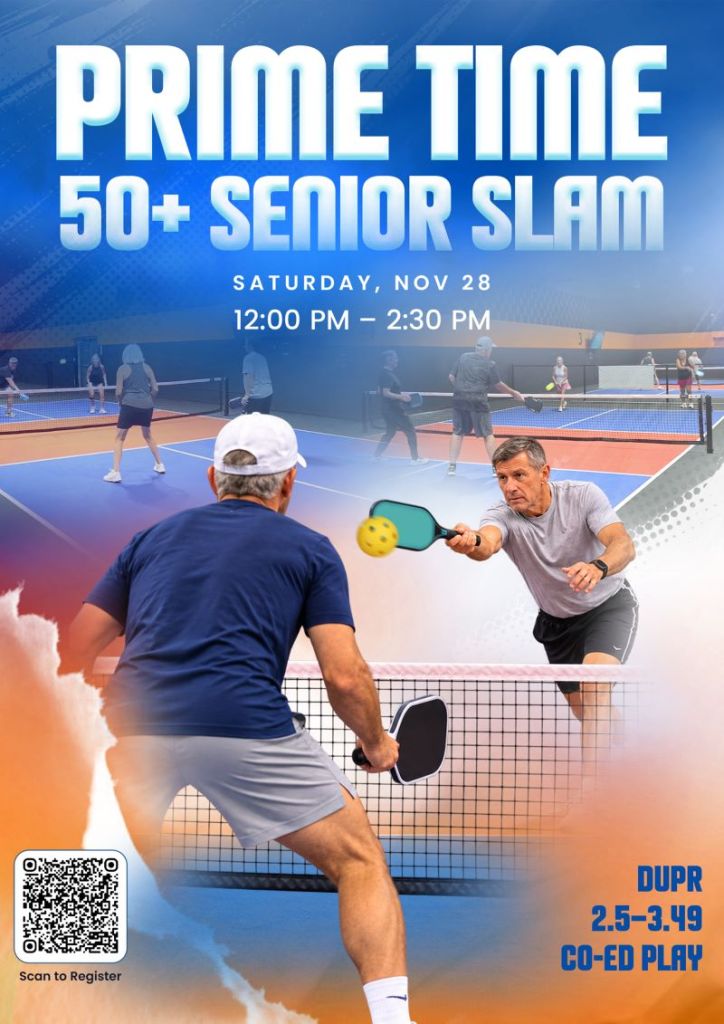

If you have stepped anywhere near a local park, a converted tennis court, or a neighborhood community center over the past couple of years, you have undoubtedly heard it: the crisp, unmistakable pop-pop-pop of a plastic ball echoing through the air.
Pickleball has taken the world by storm. It has transformed sleepy Sunday mornings into high-energy tournaments and turned casual afternoon strollers into die-hard court enthusiasts. But amidst all the viral excitement, the neon paddles, and the colorful court outfits, a very valid question often gets tossed around over post-game smoothies: is pickleball a good workout, or is it just a glorified, low-effort social hour with a net?
If you have ever caught yourself wondering whether chasing a perforated plastic ball across a compact court actually moves the needle for your health, muscle tone, and heart rate, you are in the right place. Let’s peel back the hype, look at the physical realities, and reveal the truth about what this sport really does for your body and mind across every stage of life.
The Illusion of the “Easy” Game
To the untrained eye standing behind the chain-link fence, pickleball can look deceptively gentle. The court is roughly one-third the size of a standard tennis court. The paddle is lightweight, the ball is made of lightweight plastic, and the kitchen line, that famous seven-foot non-volley zone, seems to encourage players to stand still and gently dink the ball back and forth like a relaxed game of ping-pong on concrete.
Because of this compact footprint, many newcomers assume that playing a few games barely qualifies as real movement. But ask anyone who has played three consecutive games under the warm sun, and they will tell a completely different story.
The illusion of pickleball being “easy” comes from its remarkably low barrier to entry. Anyone can pick up a paddle and hit the ball over the net within ten minutes. However, the physical magic of the sport isn’t hidden in a steep learning curve; it is hidden in its rhythm.
Because the court is smaller, the ball stays in play significantly longer than it does in tennis. There are fewer service aces, fewer outright winners, and far fewer breaks spent chasing stray balls across vast distances. What you get instead is constant, continuous motion. You are repeatedly lunging, shuffling laterally, reacting to sudden drop shots, accelerating into sprints, and resetting your weight in a low athletic stance.
So, is pickleball a good workout? When you break down the continuous engagement required to keep a rally alive, the answer becomes crystal clear: it is a dynamic, high-yield exercise disguised as pure entertainment.
Burning Calories Without Counting the Minutes
We have all been there: sitting on a stationary bike or staring blankly at a treadmill display, watching the seconds tick by with painful slowness. Traditional cardio often feels like a transaction, trading sweat and boredom for a calorie burn.
Pickleball completely flips that dynamic on its head. It operates on the principle of “exercise in disguise.”
When you are locked in an intense dink battle at the net, your brain isn’t calculating heart rates or counting down miles. Your mind is hyper-focused on hand-eye coordination, reading your opponent’s paddle angle, and anticipating where the ball will land next. Before you even realize how hard your body is working, an hour has flown by, and your fitness app tells you that you’ve logged thousands of steps.
What the Numbers Actually Tell Us
On average, a casual game of doubles pickleball burns anywhere between 300 to 450 calories per hour. If you step up the intensity to competitive singles play, that number can easily climb to 500 to 700 calories per hour, rivaling moderate jogging, swimming laps, or a high-energy cycling class.
Because the play style involves brief bursts of rapid movement followed by short periods of rest between points, pickleball naturally mimics the structure of High-Intensity Interval Training (HIIT). HIIT is widely celebrated by sports scientists for its ability to boost metabolic rates, improve cardiovascular capacity, and burn fat efficiently without causing the extreme physical burnout associated with steady-state cardio.
The Complete Spectrum of Pickleball Health Benefits
Beyond simply burning calories, the full array of pickleball health benefits touches almost every major physiological system in the body. Whether you are aiming to improve your stamina or sharpen your reflexes, stepping onto the court delivers a surprisingly comprehensive physical overhaul.
1. Cardiovascular Endurance & Heart Health
Your heart is a muscle, and like any muscle, it thrives on dynamic challenge. The short sprints and lateral shuffles in pickleball elevate your heart rate into the optimal aerobic zone, typically around 60% to 80% of your maximum heart rate. Regular play strengthens the heart muscle, lowers resting blood pressure, improves circulation, and significantly reduces the risk of cardiovascular disease.
2. Functional Agility and Dynamic Balance
Unlike linear exercises like running or treadmill walking, where you move exclusively forward, pickleball requires constant multi-directional movement. You are stepping backward to track a lob, sliding sideways to block a speed-up, and lunging forward to reach a soft drop shot. This multi-planar movement strengthens the stabilizing muscles around your ankles, knees, and hips, drastically improving real-world balance and body awareness.
3. Joint-Friendly Strength and Flexibility
One of the greatest advantages of the sport is its low-impact nature. Hard court surfaces can be tough on joints if you are jumping high or taking massive strides, but because pickleball relies on compact movements and a lower ball bounce, it puts far less explosive stress on your hips and lower back than tennis or basketball. The constant dipping into a squat position at the kitchen line acts as a continuous workout for your quadriceps, hamstrings, and glutes.
4. Hand-Eye Coordination and Neuromuscular Reflexes
The speed at which a pickleball travels across the kitchen line requires split-second decision-making. Your brain must instantly calculate ball speed, trajectory, and placement while signaling your body to execute a precise physical response. This constant neuromuscular feedback loop sharpens reaction times, refines fine motor skills, and enhances spatial awareness.
Pickleball Across the Generations: A Sport for Every Age
Very few activities can genuinely bridge the generational divide without requiring major modifications for different players. You can step onto a public court on any given afternoon and find a 14-year-old playing alongside their 42-year-old parent and 70-year-old grandparent, and the game will be wildly competitive for all of them.
Here is how the physical and mental rewards adapt to different age groups across the court:
GENERATIONAL BENEFIT PROFILE
| Age Group | Primary Physical Focus | Core Health Reward |
|---|---|---|
| Teens & 20s | Explosive Speed & Agility | High-Yield Athletic Conditioning |
| 30s & 40s | Functional Stress Relief | Low-Impact Cardiovascular Fitness |
| 50s & 60s | Joint Mobility & Core Balance | Dynamic Stability & Bone Density |
| 70+ | Active Longevity & Reflexes | Cognitive Sharpening & Community |
For Teens and Young Adults (Ages 12–25)
For younger generations raised in a fast-paced digital world, traditional gym workouts can sometimes feel monotonous. Pickleball offers high-velocity engagement. Young players who approach the game with athletic intensity experience an explosive workout that builds lateral quickness, core strength, and quick tactical thinking. In competitive singles, it serves as a rigorous cross-training option for other high-intensity sports.
For Adults in Their Prime (Ages 26–50)
Between demanding careers, family schedules, and daily responsibilities, finding two hours for a complicated fitness routine can feel nearly impossible. For this group, pickleball offers maximum physical efficiency. A 60-minute session delivers a high-calorie burn, powerful stress relief, and a social outlet all rolled into one efficient block of time. It acts as the ultimate physical reset button after a long day sitting at a desk.
For Active Older Adults (Ages 51–70)
As we move into midlife and beyond, maintaining muscle mass, bone density, and joint integrity becomes crucial. High-impact sports like distance running or squash can often lead to joint pain or overuse injuries. Pickleball provides an ideal middle ground: it delivers weight-bearing exercise that helps preserve bone density and leg strength without subjecting joints to punishing overhead impacts.
For Seniors (Ages 71+)
For older players, the sport is nothing short of a fountain of youth. Maintaining balance and coordination is essential for preventing dangerous falls, and the lateral movement patterns inherent to pickleball build the exact stabilizing muscles needed for daily confidence. Furthermore, the light cardiovascular workout keeps circulation strong, helping maintain mental sharpness and overall vitality.
The Hidden Power: Mental Health and Social Connection
When evaluating whether pickleball is a good workout, it is easy to focus exclusively on physical metrics like heart rates, muscle groups, and calorie counts. But human health is holistic, and some of the most profound benefits of the sport happen above the shoulders.
We are currently living through an era where feelings of social isolation and screen fatigue are at an all-time high. Traditional fitness spaces, like commercial gyms, can often feel surprisingly solitary. You put in your headphones, stare in the mirror, complete your sets, and leave without exchanging a single word with anyone around you.
Pickleball operates on an entirely different social frequency.
The game’s open-play culture inherently encourages conversation, laughter, and camaraderie. You are constantly switching partners, tapping paddles at the net after every match, and laughing over hilarious mis-hits or unbelievable defensive saves.
This deep social integration provides powerful mental health benefits:
- Natural Stress Reduction: The intense focus required during play pulls your brain completely out of daily worries and work-related anxiety, giving your nervous system a much-needed mental break.
- Neurochemical Mood Boost: The combination of physical exertion, sunlight, and shared laughter triggers a release of endorphins, serotonin, and dopamine, the body’s natural mood elevators.
- Cognitive Resilience: Learning new strategies, anticipating opponent patterns, and tracking score variations act as continuous cognitive exercises, keeping your brain sharp and adaptable.
The Honest Verdict: How to Make It a Great Workout
So, let’s revisit our core question with total transparency: is pickleball a good workout?
The truth is this: pickleball is as good of a workout as you choose to make it.
If you step onto the court, stand completely stationary in the back corner, wait for the ball to come directly to you, and spend twenty minutes chatting between every point, you will get a light, pleasant walkout with minimal physical strain.
However, if you approach the game with intent, if you stay active on the balls of your feet, sink into a proper athletic stance, sprint after wide shots, and play multiple games with minimal rest breaks, it transforms into an exceptional, full-body cardiovascular and conditioning workout.
4 Tips to Maximize Your Workout on the Court
- Stay Active on Your Feet: Don’t wait for the ball to hit the ground before you react. Keep your knees slightly bent, stay light on your toes, and bounce continuously so your body is ready to move in any direction instantly.
- Prioritize Singles or Fast-Paced Open Play: If you are looking for an intense calorie burn, try playing singles or joining fast-rotation doubles courts where the pace is quick and the rest intervals between games are short.
- Extend Your Reach: Challenge yourself to chase down every ball, even the ones that look just slightly out of reach. Those extra three steps of explosive sprinting add up quickly over a one-hour session.
- Warm Up and Cool Down Properly: Protect your body so you can play consistently. Spend five minutes warming up your shoulders, hamstrings, and calves before stepping onto the court, and do light static stretching after your final game to support quick muscular recovery.
Step onto the Court
At the end of the day, the best workout in the world isn’t the one that burns the theoretical maximum number of calories on a scientific chart. The best workout is the one you actually look forward to doing.
Pickleball succeeds where so many fitness trends fail because it trades obligation for genuine joy. It takes the hard work of cardiovascular conditioning, balance training, and agility work and wraps it inside an addictive, high-energy game that brings people together.
Whether you are 18 or 80, a lifelong athlete or someone stepping back into fitness after years on the sidelines, the pickleball court offers a welcoming space to sweat, compete, laugh, and move your body. Grab a paddle, head to your local courts, and experience the physical transformation for yourself!
Grab your court shoes, pick up a paddle, invite a few friends, and step onto the court to experience the best pickleball North Texas has to offer!
Play More. Connect More. Experience Texas Pickleball.
Whether you’re a beginner picking up a paddle for the first time or a seasoned player looking for competitive matches, Texas Pickleball offers climate-controlled courts, open play, events, and a welcoming community for every skill level.
📍 Roanoke, Texas | 🎾 8 Indoor Climate-Controlled Courts
Book Your Court Today → https://app.courtreserve.com/Online/publicbookings/16615
