


Learn how the right pickleball grips can improve control, comfort, and performance. Discover common pickleball paddle grip mistakes, overgrip tips, and expert advice from Texas Pickleball.
Grip Mistakes Even Experienced Players Still Make
Improving your pickleball grips isn’t just for beginners.
Even experienced players occasionally develop habits that reduce performance.
Here are some common mistakes to avoid.
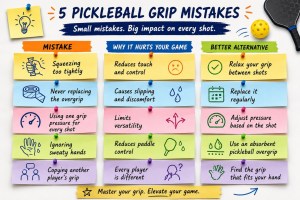
Small adjustments often lead to noticeable improvements.
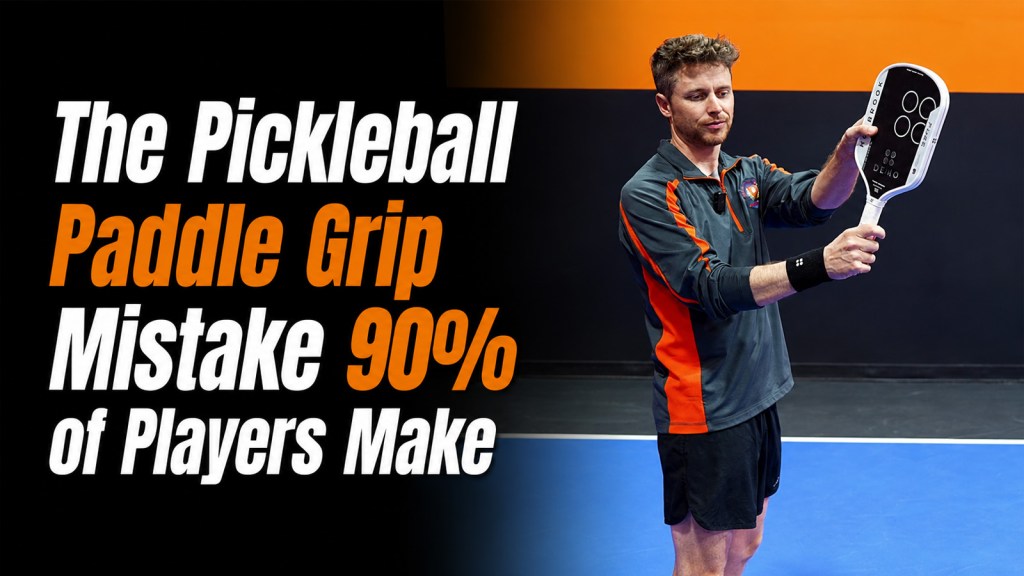
Pickleball Grips: The Pickleball Paddle Grip Mistake 90% of Players Make
“Your paddle isn’t the problem. The way you’re holding it probably is.”
Have you ever felt like your shots lacked control, your wrist got tired too quickly, or your paddle seemed to twist in your hand during a fast rally? Many players immediately blame their paddle or assume they need more practice. Surprisingly, the real issue is often much simpler.
Your grip.
One of the most overlooked aspects of pickleball is how you hold your paddle. A small mistake in your pickleball grip can affect every shot you take, from serves and dinks to volleys and powerful overheads. In fact, many recreational players unknowingly develop poor grip habits that limit their consistency and confidence on the court.
The good news? Fixing your pickleball paddle grip doesn’t require expensive equipment or years of experience. A few adjustments can dramatically improve your comfort, accuracy, and overall performance.
In this guide, you’ll learn the most common grip mistakes, how to choose the right pickleball overgrip, and simple techniques that help you play smarter and longer.
Why Your Grip Is More Important Than Your Paddle
When people shop for pickleball gear, they usually compare paddle materials, core thickness, weight, and shape.
Those features certainly matter.
But none of them can perform at their best if your grip is working against you.
Think of your grip as the connection between your body and your paddle. Every movement, every shot, and every adjustment begins there. A poor grip reduces control, creates unnecessary tension, and limits your ability to react quickly.
A proper grip allows you to:
- Generate better paddle control
- Improve shot accuracy
- Reduce wrist and forearm fatigue
- React faster at the kitchen
- Switch smoothly between forehand and backhand
- Play comfortably for longer matches
No matter how advanced your paddle is, it can only perform as well as the player holding it.
The Grip Mistake That Holds Back Most Players
The biggest mistake isn’t using the wrong paddle.
It’s gripping the paddle too tightly.
Many beginners squeeze the handle as hard as possible because they think it gives them more control.
The opposite is true.
A tight grip creates muscle tension in your hand, wrist, and forearm. That tension reduces paddle feel and makes it harder to execute soft shots like dinks, resets, and drop shots.
Professional players often describe grip pressure on a scale from 1 to 10.
For most shots:
- 3–4 for dinks and resets
- 5–6 for serves and returns
- 7–8 only during powerful overhead smashes
Learning to relax your hand allows the paddle to do more of the work.
Signs Your Pickleball Paddle Grip Needs Improvement
Not sure if your grip is hurting your game?
Watch for these common symptoms.
| Symptom | Possible Cause |
|---|---|
| Paddle twists during contact | Grip is too loose or incorrect size |
| Hand gets tired quickly | Grip pressure is too tight |
| Wrist pain after playing | Excess tension or poor grip technique |
| Missed volleys | Slow paddle adjustments |
| Inconsistent serves | Poor paddle control |
| Difficulty switching shots | Incorrect hand positioning |
If you’ve experienced one or more of these issues, improving your pickleball paddle grip could make an immediate difference.
Why Grip Size Matters as Much as Technique
Even if your technique is perfect, using the wrong grip size can create unnecessary challenges.
A grip that’s too small forces you to squeeze harder to maintain control.
A grip that’s too large limits wrist mobility and makes quick adjustments more difficult.
Here’s a simple comparison:
| Grip Too Small | Grip Too Large |
|---|---|
| Requires more squeezing | Reduces wrist flexibility |
| Can cause hand fatigue | Slower paddle movement |
| Less stability | Harder to change grips |
| Increased chance of tennis elbow | Less control on finesse shots |
Finding the right grip size helps you play comfortably while maintaining better control throughout every match.
What Is a Pickleball Overgrip?
If you’ve heard players talking about replacing their grip, they may actually be referring to a pickleball overgrip.
An overgrip is a thin layer of material wrapped over the original handle. It improves comfort, absorbs sweat, and allows players to customize the thickness of their paddle handle.
Many players choose an overgrip because it:
- Improves traction
- Reduces slipping
- Adds comfort
- Absorbs moisture
- Slightly increases grip size
- Extends the life of the original grip
It’s an inexpensive upgrade that can noticeably improve your playing experience.
Your Grip Affects Every Shot You Play
Every shot in pickleball depends on your grip.
Here’s how it influences different parts of your game.
| Shot | Why Grip Matters |
|---|---|
| Serve | Improves consistency and placement |
| Return | Better paddle stability |
| Dink | Softer touch and greater control |
| Volley | Faster reactions at the kitchen |
| Drive | More efficient power transfer |
| Overhead | Better wrist control and accuracy |
The better your grip, the easier it becomes to execute every shot with confidence.
Even the Pros Prioritize the Fundamentals
Professional player Tyson McGuffin, one of pickleball’s most recognizable athletes, frequently emphasizes that strong fundamentals create long-term success.
“Master the fundamentals, and everything else gets easier.”
Source: https://usapickleball.org
That philosophy perfectly applies to your grip. Before chasing advanced shots or expensive paddles, mastering the basics gives you the strongest foundation for consistent improvement.
Practice Beats Guesswork
Watching online videos can help you understand grip techniques, but nothing replaces real-time feedback from experienced instructors.
If you’re unsure whether you’re holding your paddle correctly, working with a coach can quickly identify small adjustments that make a noticeable difference.
At Texas Pickleball, players can refine their grip, footwork, and shot mechanics through the Train With a Coach program. Personalized instruction helps players build good habits from the start and correct mistakes before they become permanent.
Likewise, spending time on the court is essential. Using the Book a Court option makes it easy to schedule dedicated practice sessions where you can focus on improving your grip, consistency, and overall confidence.
The 4 Most Common Pickleball Grips Every Player Should Know
Now that you understand why pickleball grips matter, let’s look at the grip styles you’ll see on the court.
Each grip changes paddle angle, control, and shot selection. While beginners don’t need to master every variation immediately, understanding their strengths helps you become a more versatile player.
| Grip Style | Best For | Skill Level |
|---|---|---|
| Continental Grip | All-around play | Beginner to Advanced |
| Eastern Forehand Grip | Forehand drives and serves | Intermediate |
| Western Grip | Heavy topspin shots | Advanced |
| Two-Handed Backhand Grip | Extra backhand stability | Intermediate to Advanced |
Among these, one grip stands above the rest.
Why the Continental Grip Is the Gold Standard
If you ask most professional coaches which grip beginners should learn first, they’ll recommend the Continental Grip.
Often called the “handshake grip,” it’s created by holding the paddle as if you’re shaking someone’s hand.
Why is it so popular?
Because it allows players to:
- Transition quickly between forehand and backhand
- React faster during kitchen exchanges
- Hit serves, volleys, dinks, and overheads comfortably
- Reduce unnecessary grip changes during rallies
The Continental Grip is especially valuable in doubles, where reaction time can determine the outcome of a point.
When Should You Change Your Grip?
Many new players constantly rotate their paddle between shots.
That wastes valuable time.
Instead, keep grip changes minimal.
Here’s a simple guide.
| Situation | Recommended Grip |
|---|---|
| Serving | Continental or slight Eastern |
| Return of Serve | Continental |
| Dinking | Continental |
| Volleys | Continental |
| Overhead Smashes | Continental with firmer grip pressure |
| Defensive Blocks | Continental |
The fewer unnecessary grip changes you make, the quicker you’ll react.
How to Tell If Your Grip Pressure Is Too Tight
Many players don’t realize they’re squeezing the paddle too hard until discomfort develops.
Watch for these warning signs:
- Hand fatigue after one game
- Forearm soreness
- Wrist stiffness
- Difficulty hitting soft shots
- Reduced paddle feel
- Slower reactions at the kitchen
Relaxing your grip often improves performance immediately.
Pickleball Overgrip Can Improve Your Game
One of the simplest upgrades you can make is adding a pickleball overgrip.
Unlike replacing your paddle, an overgrip is affordable, easy to install, and makes an immediate difference in comfort.
Benefits include:
Better Sweat Absorption
Sweaty hands reduce control.
An overgrip keeps the handle dry, even during long matches.
Improved Comfort
Extra cushioning reduces hand fatigue and makes extended play more enjoyable.
Better Paddle Control
Improved traction helps prevent the paddle from twisting during fast exchanges.
Customized Grip Size
Players with smaller hands often prefer a thinner grip.
Others add an overgrip to increase handle thickness slightly.
This simple adjustment creates a more natural feel.
Consistent Practice Is More Important Than Expensive Equipment
Many players assume buying a premium paddle will instantly improve their performance.
While quality equipment helps, consistent practice has a much greater impact.
Practicing with the correct pickleball paddle grip allows you to:
- Build muscle memory
- Improve shot consistency
- Develop quicker reactions
- Reduce unforced errors
- Gain confidence during competitive play
The more repetitions you get, the more natural your grip becomes.
Grip Maintenance Is Part of Paddle Maintenance
Taking care of your grip extends both comfort and performance.
Good habits include:
- Wiping the handle after each session
- Storing your paddle indoors
- Avoiding prolonged heat exposure
- Replacing worn overgrips promptly
- Keeping extra overgrips in your bag
These simple habits protect your investment while keeping every match comfortable.
Indoor Courts Help You Develop Better Technique
Learning proper grip mechanics is easier in a consistent playing environment.
Indoor courts eliminate distractions like wind, uneven surfaces, and unpredictable weather.
That means you can focus entirely on:
- Grip pressure
- Paddle angle
- Footwork
- Ball control
- Shot placement
Texas Pickleball Gives Players a Competitive Edge
Reading articles is a great way to learn.
Practicing in the right environment is what transforms knowledge into skill.
TX Pickleball offers everything players need to improve their game in one convenient location.
Professional Coaching
Work with experienced coaches who can fine-tune your pickleball paddle grip, improve your mechanics, and help you develop stronger fundamentals.
Structured Clinics
Participate in skill-focused Clinics where you’ll practice grip techniques, shot control, and game strategy in a supportive setting.
Flexible Court Reservations
With the convenient Book a Court option, you can schedule practice whenever it fits your lifestyle, giving you more opportunities to reinforce good habits.
Competitive Events
Join exciting Events and league play to test your progress against players of different skill levels while building confidence under match conditions.
Modern Indoor Facility
The premium indoor courts at Our Facility provide dependable playing conditions that support consistent improvement year-round.
Membership Helps Players Improve Faster
The best players don’t improve by playing once in a while.
They improve by playing regularly.
That’s why many pickleball enthusiasts choose a Membership at TX Pickleball.
Frequent access to courts, organized activities, and a supportive community creates more opportunities to practice and refine your skills.
Membership Benefits
The more often you play, the more comfortable your grip becomes.
Learn Beyond the Court
Great players never stop learning.
The Blogs section at TX Pickleball offers educational articles covering strategy, equipment, drills, and beginner-friendly advice to help players continue improving between matches.
Combining quality instruction with consistent learning accelerates your progress.
Frequently Asked Questions About Pickleball Grips
TX Players Trust Texas Pickleball
Players don’t return to TX Pickleball just because of the courts. They return because every visit helps them become better players.
From first-time beginners to experienced competitors, TX Pickleball creates an environment where learning feels enjoyable, progress is measurable, and every session adds value.
What makes TX Pickleball a favorite among players?
- Professional coaching tailored to every experience level.
- High-quality indoor courts with dependable playing conditions.
- Skill-building clinics designed around real game situations.
- Fun social play, leagues, and competitive events.
- Flexible court reservations that fit your schedule.
- A welcoming pickleball community that motivates you to keep improving.


